

Fields of Innovation
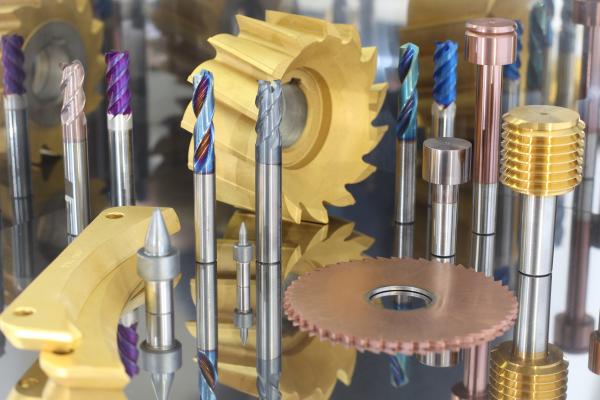
Wear reduction and sustainable coating development
Coatings and surfaces give rise to additional and more demanding requirements. New approaches are being developed to increase the overall service life of coated tools and components. Examples of tasks include
- Alternative coating materials and coating processes
- Reduction of wear and improvement of tribochemical behaviour
- Interrelationships between different requirements
- Coatings for specific tasks
Efficient use of resources
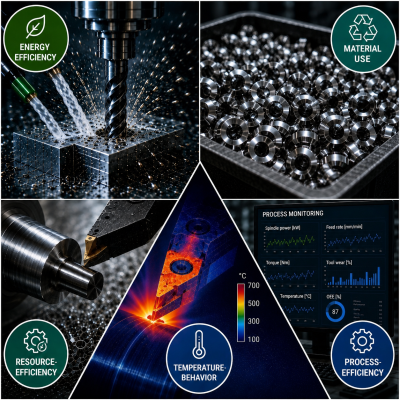
Not only the manufacture, but also the use of components and tools must be optimised in terms of energy and resource consumption in order to ensure the sustainability of the overall process. This requires both efficient processes and alternative uses or materials.
- Material substitution and the use of cost-effective raw materials
- Improved recycling of materials
- Energy recovery and improved energy efficiency
- Triobological optimisation of manufacturing processes
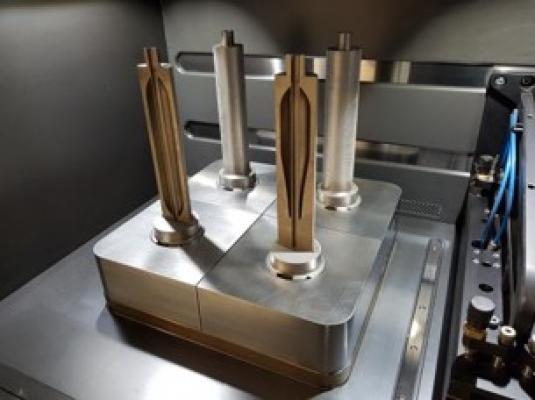
Tool and component reconditioning
The reconditioning of coated tools and components enables their repeated use and leads to financial savings and environmental benefits through reduced resource consumption. The requirements for effective reconditioning lie in defined load scenarios and tailored process chains:
- Defined wear detection for optimised manufacturing processes
- Identification of characteristics of worn tools to define reworking and corrective measures
- Regrinding technology
- Coordination of the steps leading up to recycling and preventive maintenance
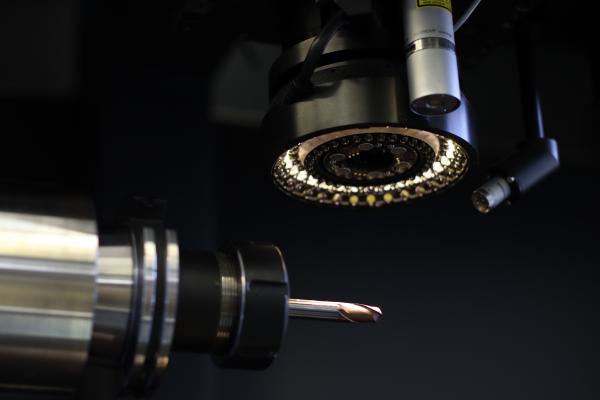
Process optimisation and smart automation
Automated processes, optimised process chains and their control require both control mechanisms and means of data acquisition and analysis. Alternative and hybrid process chains play just as important a role here as additive manufacturing and laser material processing. The key drivers of development in this area will be:
- Creation of a ‘digital twin’ for process monitoring
- Automated status detection and classification
- Collection and linking of process data
- Smart use of process data to control manufacturing processes
Mission
International competitiveness requires not only first-class technical features in tools and machine components and established customer loyalty, but also other factors for success. Numerous studies by international consultancy firms show that customers and the market environment are placing ever greater emphasis on sustainability.
The international megatrends reflected in sustainability and which influence the evaluation and competitiveness of products include
- energy efficiency and decarbonisation
- material substitution and cost-effective raw materials
- the circular economy and reuse
- intelligent automation
For future-proof production processes, it is therefore essential to combine economic and environmental aspects to ensure sustainability and resource efficiency. Our focus here is on products and processes designed to improve performance and usability, and to ensure a sustainable product life cycle.
Objectives
Our aim is to equip the entire process chain relating to the manufacture and use of tools and components with technology that enables us to establish a sustainable, resource-efficient and reliable circular economy.
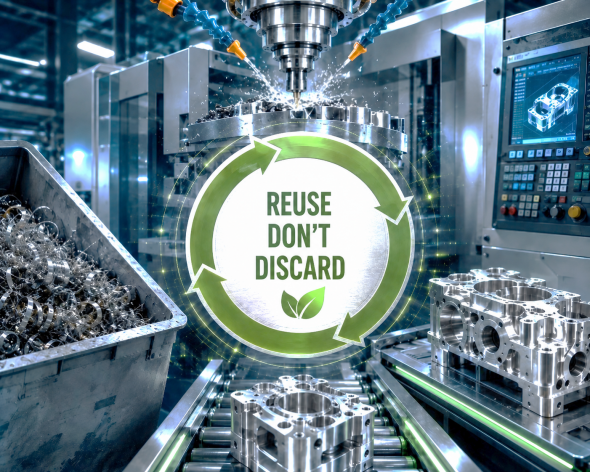
Under our expanded guiding principle for the current Project Phase II, ‘Upcycle and reuse instead of throwing away’, we are pursuing an approach aimed at significantly increasing the overall service life of tools and components through
- coating, recoating and reuse.
- Substitution of cost-intensive materials
- Establishment of resource-efficient processes
This enables financial savings and environmental benefits, such as minimising resource requirements, energy consumption and CO₂ emissions, as well as a significant increase in the sustainability of production.